Discovered planets, unknown regions and enemies of men

“Colonialism. The enforced spread of the rule of reason. But who is going to spread it among the colonisers?”
– Malcador, the Sigilite
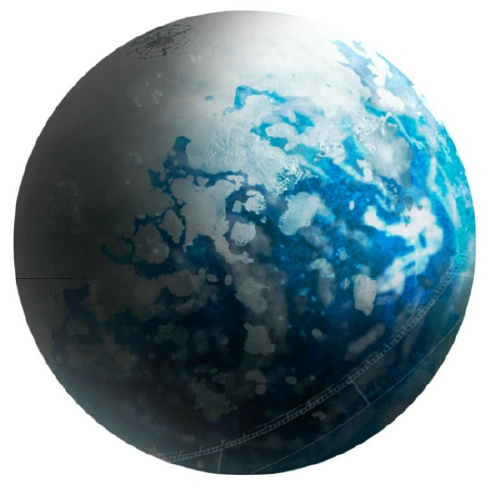
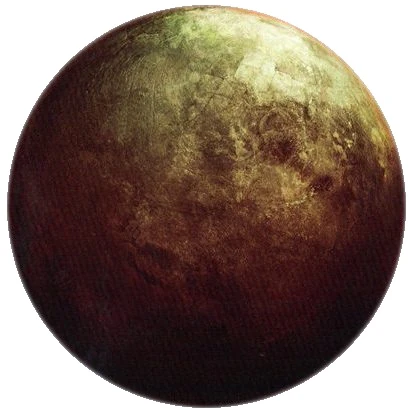
There are many worlds of great importance to the Imperium discovered during the Great Crusade. They are as different to one another, as are the people inhabiting them, sometimes for millenia, often in unimaginably harsh conditions. Each of those breed a different type of character, abilities and remarkable traits, unique among numerous citizens of the Imperium.
***
Unknown planets
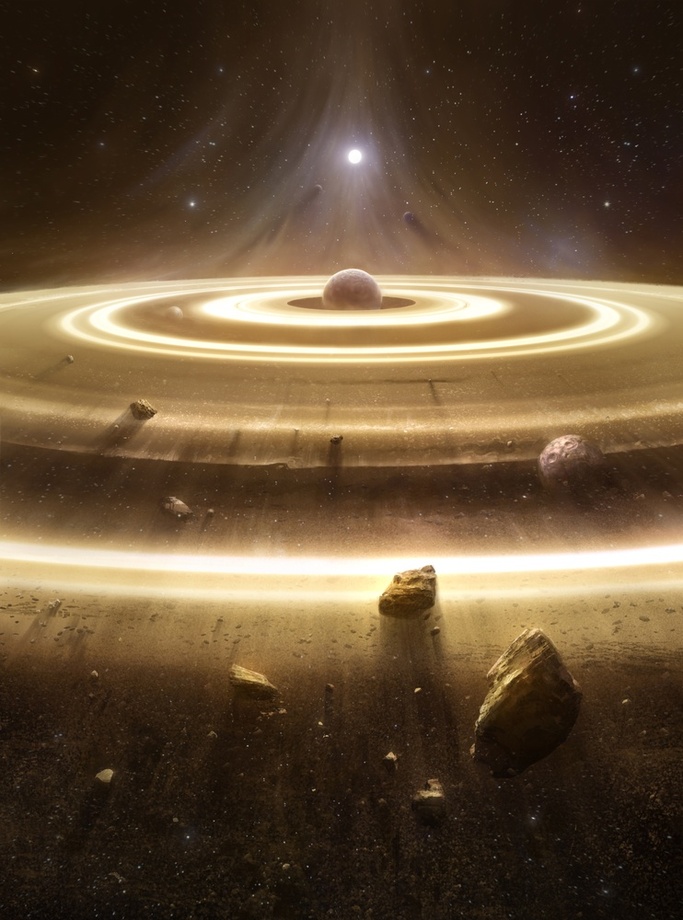
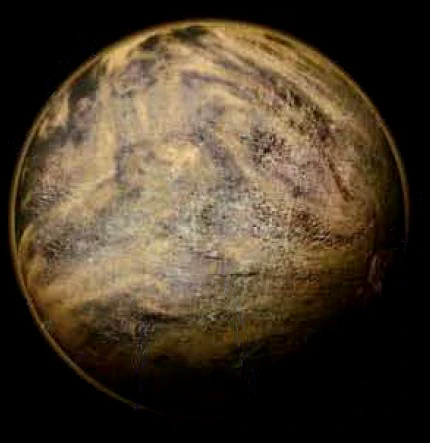
Surprisingly as it may seem, this is the most common and most logical choice of a “homeworld” for almost any character. Unimaginably vast galaxy contains immeasurable number of planets, each wit their unique cultures, environments, traditions and characteristics yet undiscovered by the Imperium of Man. Should you choose to start your campaign at one of those still unknown worlds, you get to choose what its and yours story was before coming of the Imperium, just as any relevant traits, merit and flaws your character may gain due to its original birthplace’s nature. Discuss your ideas with the GM and enjoy our very own background.
Starting bonus:
- whatever you like (and convince the GM to)
***
Terra

Temperature / Climate
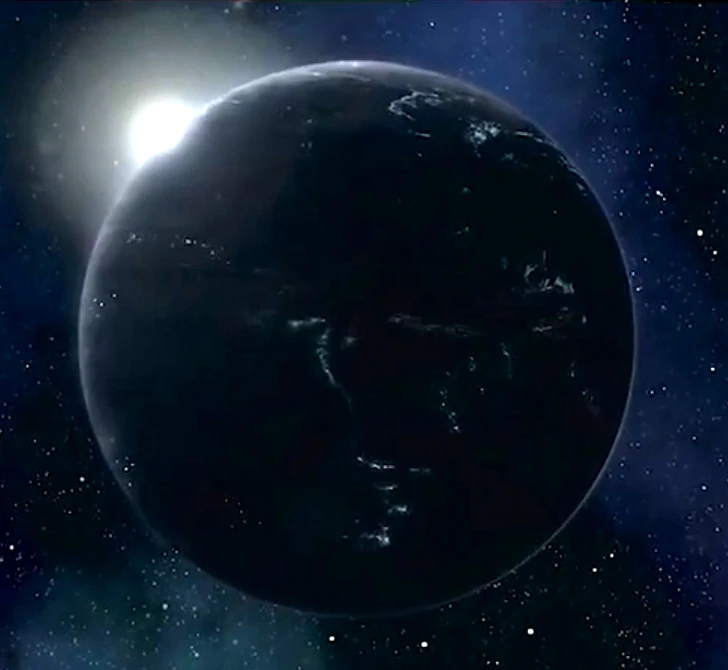
Temperate, global ecumenopolis, massive environmental damage
Population
hundreds of billions
Segmentum
Segmentum Solar
Starting bonus:
- +1 Talent & Adaptation
- +2 Humanity, Duty & Conviction
*
Next to nothing is know about Terra’s early millennia during the so-called Age of Terra, save that it was between the 1st and 15th Millennia AD that Mankind made their first forays into space, notably colonising Mars. Warp travel was at this point was technologically impossible, meaning most space colonies were self-sufficient and isolated by long, dangerous sub-light speed journeys. Likewise, not much is known about the Age of Technology and Age of Strife that followed, or why Terra was spared the annihilation that met countless other Human-settled worlds. It was at this time that Terra and Mars made ancient agreements that would tie the fates of both planets forever, with Mars at this time a hub of manufacture, scientific research and commerce.
Towards the end of the Age of Strife – several thousand standard years during which the first galaxy-spanning empire of Humanity crumbled and fractured into isolated fragments – the Emperor of Mankind first revealed Himself to Humanity. He began reconquering Terra with an army of Thunder Warriors during the so-called Unification Wars, which were the genetically modified super-soldiers who preceded the Space Marines. The various techno-barbarian empires on Terra were destroyed with this unstoppable army, and the Emperor soon controlled the whole planet – with designs on taking back the entire galaxy.
***
Mars
Temperature / Climate
-63° C mean (-143° C low, 35° C high); arid desert conditions, thin but breathable atmosphere
Population
20,000,000,000
Segmentum
Segmentum Solar
Starting bonus:
- +1 Implant & Mechatualism
- +2 Faith, Technocult & Transhumanism
*
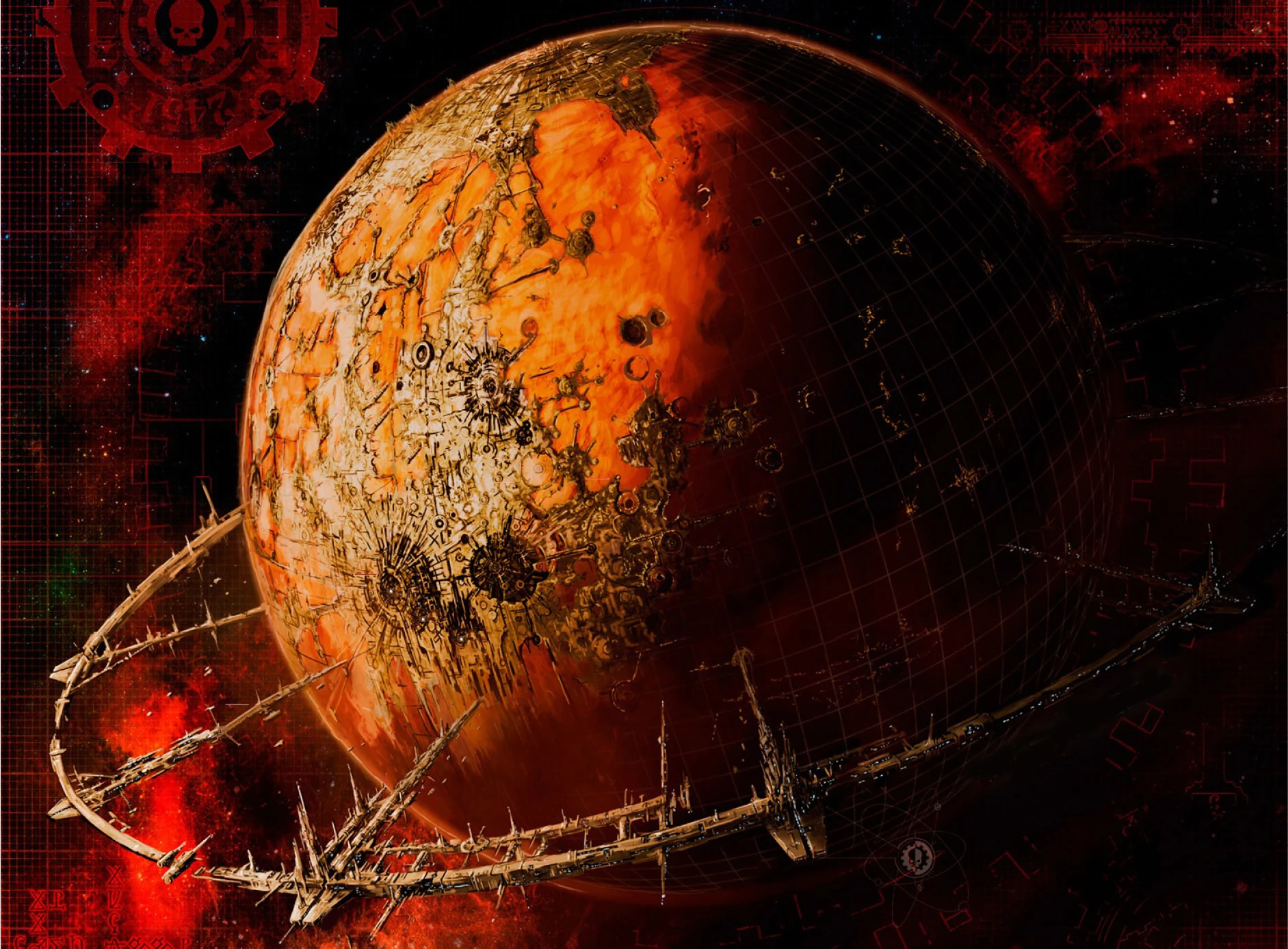
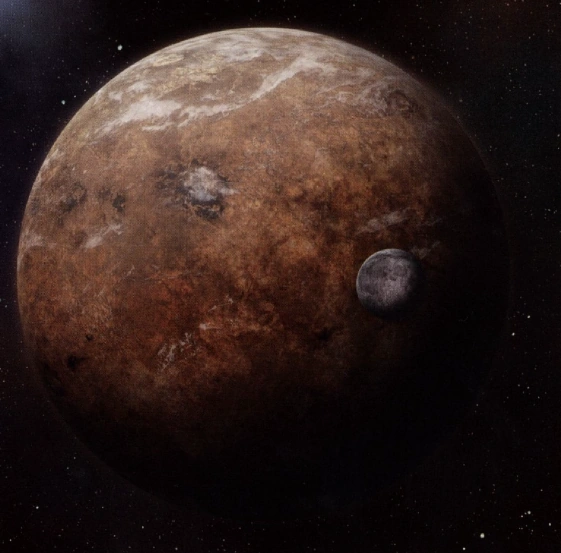
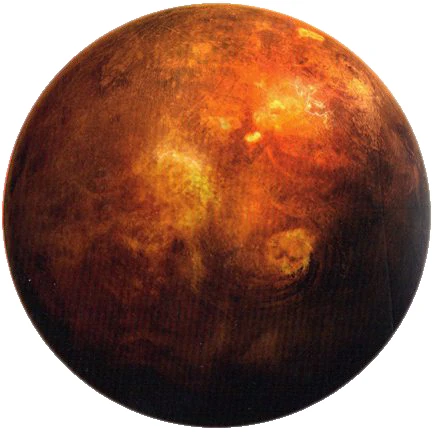
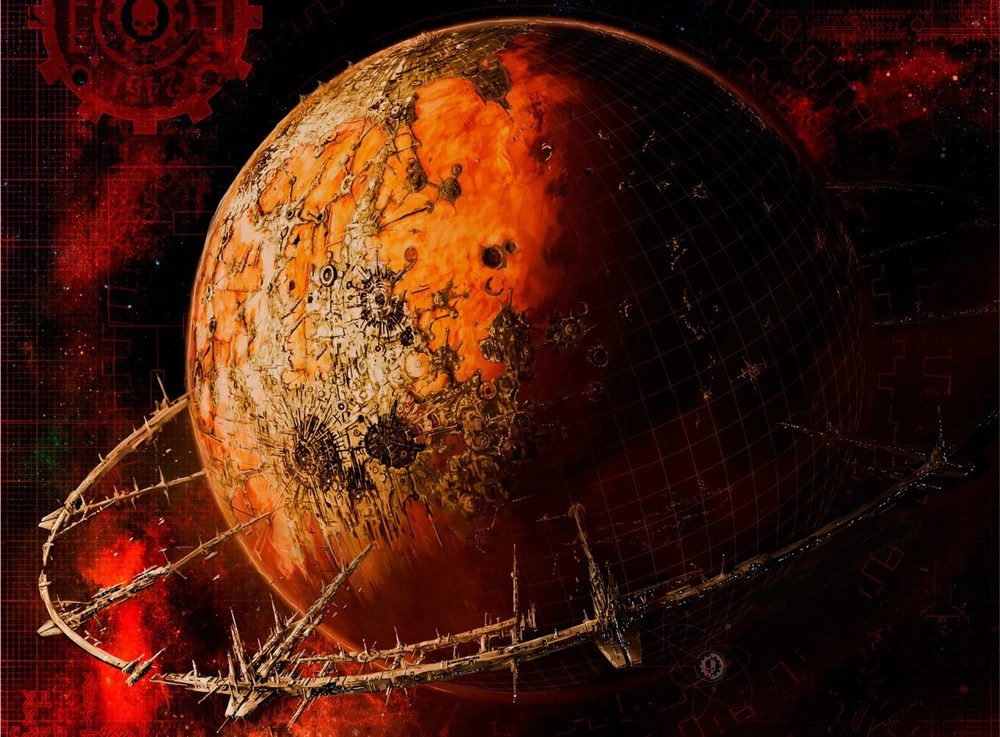
Mars, also known as the “Red Planet,” is the first and greatest Forge World – the “Forge World Principal” – of the Imperium of Man. It produces vast numbers of weapons, vehicles and other advanced technology for the Imperium and its war efforts throughout the galaxy. Mars is also the homeworld and headquarters of the Adeptus Mechanicus and a planet sacred to the faith of the Cult Mechanicus, which is one reason why travel to the Red Planet for Imperial personnel who are not members of the Mechanicus and share its peculiar faith is restricted.
Millennia of incessant construction have turned Mars into a smog-choked hellscape. The surface is covered with massive forge complexes, sprawling refineries, towering monuments to the glory of the machine and weapons shops that scrape the skies. The massive orbital conglomeration of thousands of drydocks and other starship manufacturing facilities in a geosynchronous orbit that turn above the Martian equator are known collectively as the Ring of Iron, that constructed the vast exploratory and Expeditionary Fleets of the Great Crusade.
***
Colchis

Temperature / Climate
Arid – partial sustainability, prevalent desert conditions extending to the edge of the habitable polar regions, equatorial belt temperatures exceeded human tolerability at zenith of planetary cycle.
Population
Unknown, probably tens of millions +
Segmentum
Segmentum Pacificus
Starting bonus:
- +1 Forbidden Lore
- +3 Faith, +1 Corruption
*
Caste of priests calling themselves the “Covenant” rule over the shattered society of Colchis on the promise that a great leader would one day come to deliver them from the darkness their world had descended into. With harsh religious observance, the Covenant’s strict dogma became a gigantic, monolithic belief structure that permeated every facet of daily life on Colchis. Colchis was a world of peace and law, and the people of Vharadesh, the capital city of the world also known as the City of Grey Flowers, respected its holy leaders above all.
Over the generations, civilisation had spread itself thin across the arid continents of Colchis, with most of its city-states clinging to the coasts. Each city-state maintained links to the others though sky trade and ocean freight, on a world where roads across the desert plains would be little more than folly. Unlike much of the emergent Imperium, Colchis was unprotected by vast orbital weapon platforms. More tellingly, it also had little in the way of the industrious space stations responsible for feeding and refuelling parasitic expeditionary fleets in their crusades through the galaxy.
***
Nostramo
Temperature / Climate
Frigid; only habitable at the equator
Population
High; in the tens of billions
Segmentum
Ultima Segmentum
Starting bonus:
- +1 Subterfuge & Stealth
- +3 Rivalry, +1 Ambition
*
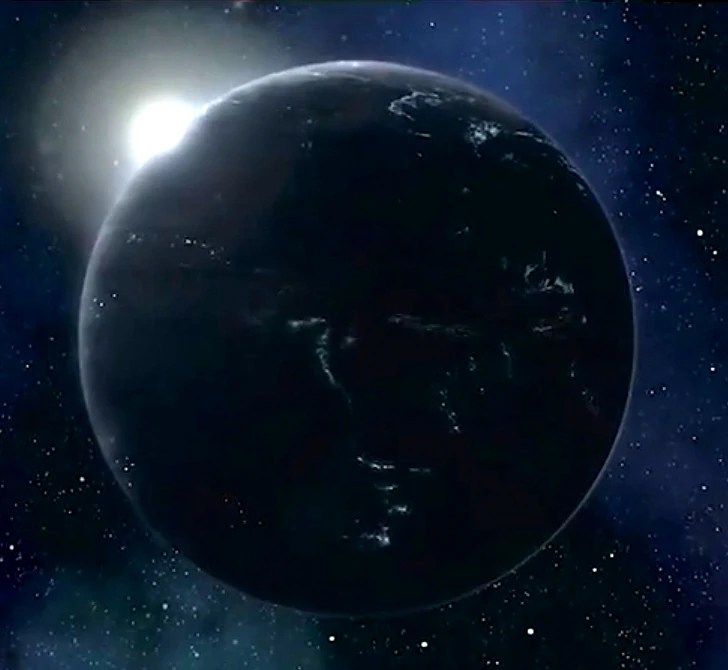
Nostramo was is a bleak Hive World that’s perpetually dark due to its pollution-clogged atmosphere and the fact that it circles a slowly dying star whose light is unable to penetrate this haze to reach the surface. The world is barely better lit at noon than at midnight. A shroud of perpetual darkness produced by the massive amounts of toxic smog keeps the planet swathed in dull greys and deep blacks. Only the rich can afford the Nostraman idea of illumination, which is little more than dim blue illuminalion-strips that are placed in the ceilings of the ruling hierarchy’s luxurious dwellings in the spires of the dark world’s hive cities. The adamantium that riddles the planet’s crust, Nostramo’s chief export to its neighbouring worlds, is the reason for the thousands of metalworks and chemical plants that scar the Nostraman landscape and choke the air with noxious filth.
The vast majority of the planet’s people live in abject poverty as foundry labourers, whilst the rich grow in affluence, trampling down or simply killing outright any who dare to oppose the status quo. Murder, theft and extortion are rife in Nostraman society. Crime runs unchecked, and the merest gesture towards law enforcement is the horrific brutality meted out by the ruling hierarchy’s hired underhive thugs. Depression is an inescapable way of life for most Nostramans, and overpopulation is prevented not by war, disease or legislation, but by the suicide rate.
***
Barbarus

Temperature / Climate
Unknown; marginally habitable; highly toxic atmosphere
Population
Unknown; low
Segmentum
Segmentum Tempestus
Starting bonus:
- +1 Vitality
- -1 level of any toxin’s severity
- +1 Corruption & Rivalry
*
This Feral World orbits near a dim yellow sun in the Segmentum Tempestus, which created a thick, miasmic atmosphere of toxic chemicals. The most virulent of these gases rose through Barbarus’ perpetual clouds towards the heat of its star, making the world beneath a dismal place of night, unbroken by starlight and possessed of short, shadowy days.
A domain of savage, alien overlords who ruled over an entrapped and preyed-upon human population as cruel as terrible gods. The only atmosphere breathable by humans existed only in the lowest elevations, on flat moors and in the valley basins of the jagged, stony mountains which spined the world. These unknown alien overlords were immune to the toxic soup of the planet’s upper atmosphere, building great keeps of grey stone in the mountain fastnesses.
***
Olympia

Temperature / Climate
Combination of desert-like harshness with rapidly changing conditions of highland landscapes; extended periods of draught divided by the stormy seasons
Population
Moderately high; several billions
Segmentum
Segmentum Ultima
Starting bonus:
- +1 Battle & Hoplology
- +1 Rivalry & Ambition
*
Olympia is an ancient human-colonised planet on the opposing side of the galactic core from Terra, and was one of a number of worlds in a region heavily settled, it is believed, in the latter days of the Dark Age of Technology. Having survived the Age of Strife largely intact, scientific lore and industry on Olympia had regressed to a fractured but largely pre-atomic industrial level, but there remained stagnant as a sophisticated feudal culture had developed. Although relatively rich in organics and with a plethora of lithic mineral forms, much of its fissile materials and easily available conductive metals had been strip-mined in antiquity and removed offworld, serving to enforce a bar on Olympia’s progression technologically.
Further complicating matters is the almost unbroken mountainous terrain which dominates Olympia’s land masses and makes large scale urbanisation and agriculture impossible. These unique conditions bred an equally singular culture which evolved into a diverse patchwork of hundreds of independent city-states and client satrapies. A secular, opportunistic culture, given to the pursuit of wealth, security and dominance, the Olympian arts of war evolved towards a sublime mastery of fortress-building, siege craft and stone masonry.
***
Caliban
Temperature / Climate
Heavily forested, hazardous fauna
Population
Several millions
Segmentum
Segmentum Obscurus
Starting bonus:
- +1 Weapongence & Survival
- +2 Corruption & Brotherhood
*
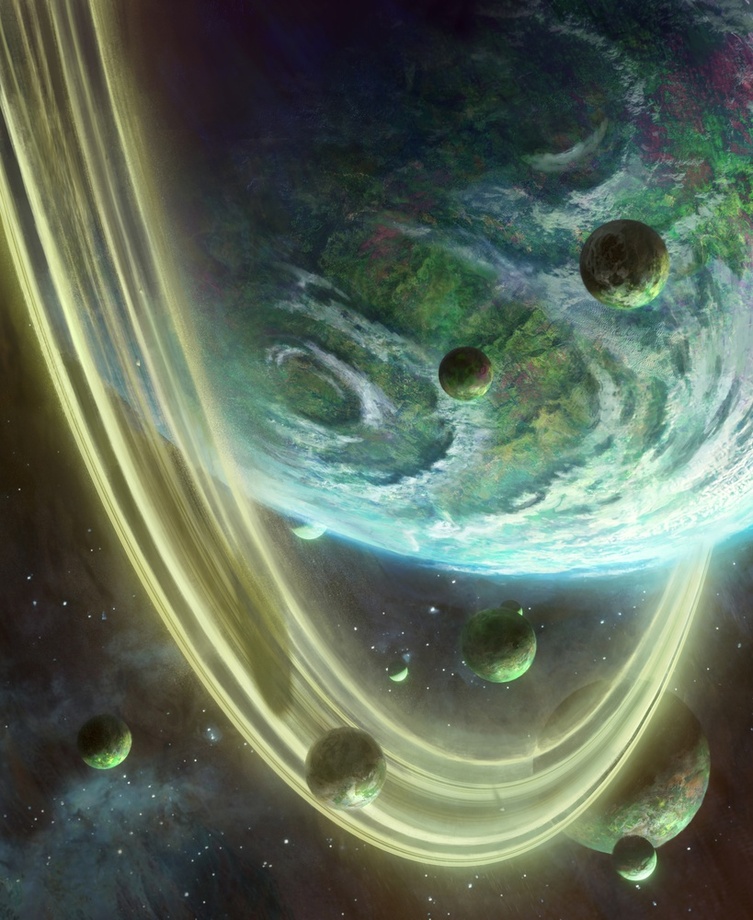
The dark, twisted forests that cover the surface of this lush, green planet are as beautiful, as they are deadly. Day-to-day survival is a ceaseless struggle due to the ferociousness of the ravening Great Beasts that infested the Calibanite forests. To tread the forest paths is to invite certain death. The human inhabitants of Caliban are forced to live in huge fortresses and castles located in clearings hacked from the forests of the planet. Cut off from Terra and the rest of Mankind’s interstellar community by the Warp Storms that savaged the galaxy during the Age of Strife, human civilisation on Caliban devolved into a semi-feudal state, with most of the population ruled over by a small warrior elite, similar in function and form to the knights of Old Earth’s ancient past. The nobility of Caliban are raised from childhood to live and die by the sword, great warriors known for their courage in facing the Great Beasts and other dangers of the Calibanite forests.
They fought in a primitive form of power armour and their main weapons were the Chainsword and Bolt Pistol, all weapons derived from humanity’s common technological legacy. However, most other forms of advanced technology had been lost to the Calibanite civilisation, and the warrior nobility therefore rode into battle on powerful warhorses known as destriers.
***
Baal
Temperature / Climate
12 degrees Celsius; overwhelmingly arid desert punctuated by radioactive zones; all planetoids in the Baal sub-system exhibit an abnormal level of ambient radiation
Population
122,000 (includes moons)
Segmentum
Segmentum Ultima
Starting bonus:
- +1 Endurance & Survival
- +1 Corruption & Brotherhood
*
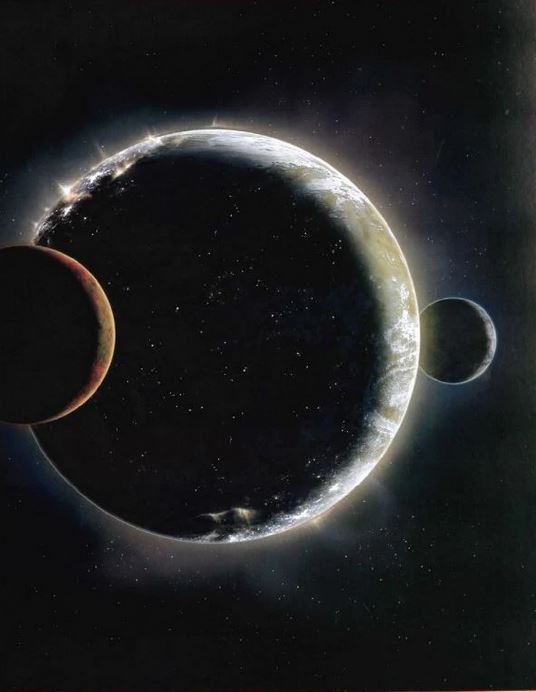
In ancient days Baal and its moons all had Earth-like atmospheres. Baal itself was always a world of rust-red deserts much like Mars but its moons were paradises for mortal men, where their people lived in harmony with nature and pursued lives of ease and freedom. The people of Baal became exceptional artisans and spent their time creating mighty monuments, carving the mountains themselves into statues of their rulers and their gods. They even ventured onto the surface of desolate Baal itself, leaving colonies and breathtaking edifices in their wake. No one knows exactly what happened to change this idyllic state of affairs. All that is certain is that during the fearful events that marked the downfall of interstellar Human Federation and the end of the Age of Technology, the moons of Baal suffered terribly in a civil conflict that was most likely between them.
Ancient weapons of terrifying potency were unleashed. Cities became plains of smouldering glass. Lush grasslands became polluted deserts. Seas became poisoned lakes of toxic sludge. The people of Baal died in their millions and it looked as if humanity might become extinct in the Baal System. But somehow people survived. They clung precariously to life on the edges of the radioactive deserts. They became scavengers, picking through the scattered bones of their own once-great civilisation. In the dark time that followed the collapse of all order, some became worse than scavengers, and in their desperation turned to cannibalism.
Over the course of the following centuries, the accumulated chemical and radioactive toxins that built up in the survivors’ bodies led them to devolve into mutants, shambling parodies of the noble men their forefathers had once been. There were some who held on to their Humanity and preserved a semblance of sane behaviour, but these were the embattled few amongst a new and savage culture that evolved amid the ruins of the old. The only social unit left was the tribe.
For Human and mutant cannibal alike, the only folk they could rely upon were their own kin. The people of the Baal System became nomads, shifting from place to place, picking the ruins of their lost civilisation clean, warring to preserve the spoils they had gathered. The tribes fought constant wars, webs of alliances shifting intermittently as each tribe strove for supremacy and survival. Extinction awaited the slow and the weak. Where once the moons of Baal had been near-paradise for Mankind, now they were living hells.
For the few surviving humans, existence was a constant struggle. They wandered the surface in ramshackle vehicles, desperately hoping that their patched-together radiation suits would save them, praying that they would never hear the hideous tell-tale clicking of their rad-counters, a sound that meant death was imminent. For a time it seemed that Humanity was doomed and soon there would only be an endless desert ruled over by the feuding mutant tribes. Then, out of the star-strewn darkness of the heavens, came a sign of hope.
***
Prospero

Temperature / Climate
Temperate, moderate rainfall spread across the year or portion of the year with sporadic drought, mild to warm summers and cool to cold winters
Population
Approx. 30 million
Segmentum
Ultima Segmentum
Starting bonus:
- +1 Psychic Prowess
- +2 Ambition, +1 Illumination
*
Chosen by its settlers for the planet’s isolated position although it still remained far closer to Terra than many other human colonies settled during the Dark Age of Technology, the Civilised World of Prospero had only a few redeeming qualities. It possessed no independent resources, little contact with any outsiders and only a few sources of nourishment. The only reason for planting a colony there was because it was a very good place to hide, and thus became a large community of psychically talented and often physically mutated humans who could find no refuge elsewhere in the galaxy.
Nowadays, Prospero had developed into a paradise world. Many of the vast buildings on the planet are massive gold and marble pyramids. Prospero is a planet with blue skies and gleaming Egyptianesque architecture. One of the world’s many cities is the capital city of Tizca, often referred to as the City of Light, a regional hub for philosophers, craftsmen and psychicly gifted individuals.
***
Macragge
Temperature / Climate
Temperate, though 75% of land mass is uninhabitable mountains
Population
400,000,000
Sub-sector
Ultramar
Segmentum
Segmentum Ultima
Starting bonus:
- +1 Leadership & Administration
- +2 Duty & Conviction
*
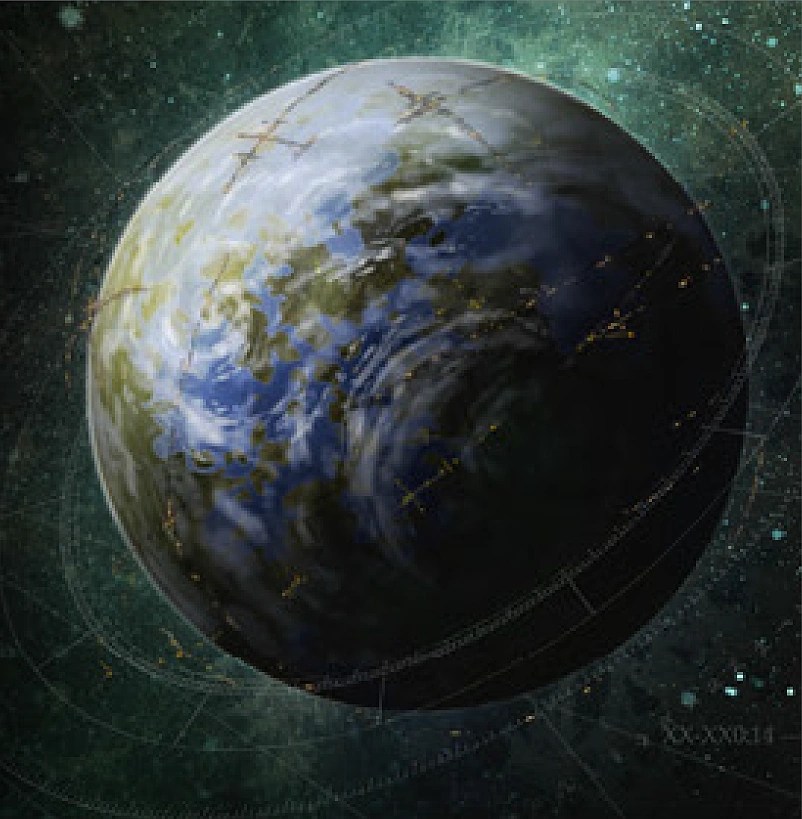
Macragge itself is mostly bleak and rocky, with more than three-quarters of its land mass formed from mountainous upland almost entirely devoid of life. This is a harsh but not inhospitable world that Mankind had inhabited for many centuries since the Dark Age of Technology. Its industries had survived the Age of Strife and its people had continued to build sub-light spacecraft throughout the period of intense Warpstorms. The people of Macragge had successfully maintained contact with neighbouring human-settled star systems, despite the loss of many ships and crews. The Primarch’s capsule was discovered by a group of noblemen out hunting in the forest. They broke the capsule’s seal to reveal a strikingly beautiful and perfectly formed child surrounded by a glowing nimbus of innate power. The amazing infant was brought before Konor Guilliman, one of a pair of Consuls who governed the civilised region of Macragge. Konor adopted the child as his son and named him Roboute Guilliman.
By the time the Emperor reached Macragge, Roboute Guilliman had ruled for almost five standard years. In that time the world had undergone a transformation. Its people were well-fed and prosperous, its armies well-equipped and its cities had been rebuilt in glittering marble and shining steel. Vessels from Macragge plied regular trade with the local star systems, bringing raw materials and more people to the flourishing world. The Emperor was astounded to find a planet so well-ordered and prosperous, and realised at once that Roboute Guilliman was a Primarch of unsurpassed ability and vision. Once Guilliman learned the truth of his origins he immediately swore his fealty to the Emperor, his true father.
***
Inwit

Temperature / Climate
Hostile / Sub-Zero Arctic
Population
Unknown
Segmentum
Segmentum Solar
Starting bonus:
- +1 Expertise & Survival
- +4 Upgrade Points
- +3 Duty & Conviction
*
Inwit is a world of death and ice. Its star is old and withered, bleeding the last of its heat as cold, red light. Tidally locked against its dying star, perpetual darkness soaks one side of the planet, faded sunlight the other. Crevasse mazes, frozen mountain ranges and plains of frost dunes cover the planet’s dark side – this is the Splintered Land, the beast-stalked wilderness which shapes the bodies and beliefs of the human population that clings to life here.
Under the ice crust, thick seas flow in sluggish tides and pale and sightless creatures swim the waters, hunting by vibration and a preternatural taste for blood. Far above this desolation, great and ancient space stations and orbital shipyards look down on the cold-shrouded worlds through perpetual auroras – created in a lost past, these citadels of the void have looked down on Inwit since before any records or tales can recall. Whilst on the planet, the light side of Inwit offers little more comfort than the dark, being a land of drift-crusted saline seas and sparse bare rock under the unblinking gaze of the red sun.
There is little of value on Inwit; its seas are buried or lifeless, its mountains bare of riches and its native species vicious. There is, however, one thing that this harsh world produces that led it to conquer a star cluster and endure as an island empire of order in the Age of Strife: its people. Though they are barbaric, they are far from unsophisticated. The warriors of Inwit are raised to endure and survive. The world that bears them teaches them to never relent and that the price of weakness is death, for them and the rest of their kin.
Death comes in many forms on Inwit; in the ice storms that can freeze and cover a man in seconds, at the claws of the predators that roam the Splintered Lands, and in the lapse in concentration that allows the cold to penetrate the warmth-seals of a hold. These factors make a certain kind of people: strong, grim and dedicated to the survival of the whole rather than the individual. Much of the world’s population is nomadic, moving between the subterranean ice hives to trade in weapons, fuel and technology. Conflict between the roaming clans is common and young warriors learn how to defend against their clan’s enemies as early as they learn how to endure the death touch of Inwit’s merciless chill. They know how to learn, have an innate sense of an object’s functional value and, most importantly, they have the strength to conquer those who possess knowledge they do not.
Long ago during Old Night, before the coming of the Emperor was even a dream on night-shrouded Terra, the people of Inwit began to create their own realm in the stars. On every world they took, they assimilated, realigned and reinforced. With each conquest their culture and learning grew, but Inwit itself remained unchanged even as it became the centre of a stellar empire. The ice hives and clan disputes remained and while their world birthed starships and ringed its orbits with weapon stations, its rulers kept to the old ways, the ways that had created their strength, the warlords and matriarchs who commanded armies amongst the stars still living lives little easier than their vassals. So it was, and so it is now.
***
Nocturne

Temperature / Climate
Temperate, turning Arctic during the Time of Trials
Population
15,000,000
Segmentum
Segmentum Ultima
Starting bonus:
- +1 Empathy, Athletics & Regeneration
- +3 Humanity, +2 Brotherhood & Duty
*
“Have you ever been to our benighted world? Its name literally means ‘night’, but we do not dwell in darkness. Hell comes to our cities and our peoples, it visits upon the earth such ravages as to make the sky black as sackcloth and the ground spew red, molten death. It is not a hospitable world, this world, for monsters lurk in its fuliginous depths and death is but a slip away for the careless, the unwary or the simply ill-fortuned. It is not a populous world because much of it cannot be populated. The mountains are bleak, craggy places, their summits wreathed with poisonous fumes. The deserts are many, and they are desolate, unforgiving plains of ash. Our few rivers are veins of acid and alkali, tainted by the sulphurous earth. We have no forests, save for the petrified groves that lurk in the hot shadows of our tallest peaks. Our fauna takes to the air on leathern wing or hunts the dune with tusk and claw. It is serpentine and reptilian; chitinous and saurian. But it is home, this broken land, and we defend it with our blood and breath. Woe betide any who come here seeking to put it asunder. They will find it a terrible place, a very terrible place.“
— Anonymous Nocturnean tribesman of Themis
***
Chemos

Temperature / Climate
Temperate to Sub-arctic / Moderate
Population
500,000,000
Segmentum
Ultima Segmentum
Starting bonus:
- +6 Upgrade Points
- +3 Ambition & Innovation
*
The world of Chemos in the Ultima Segmentum’s Aquitane Sector was originally settled by human colonists before the Age of Strife, when Warp travel became impossible due to the numerous Warp Storms that cut off the human settled worlds from one another, forcing these isolated worlds to fend for themselves without the support of their human-settled neighbours in other star systems. An ancient surviving text from that time, known as the Libram ex Dominar, tells that Chemos was one such world, a industrious mining colony dependent on interstellar trade for food. The planet’s rulers made every effort to extract enough raw food from the harsh environment to feed their people, but Chemos was a world dying a slow death.
During its isolation, the archivists of Chemos recorded a picture of a bleak, unforgiving world. Warmed by two small, distant suns and surrounded by a nebular dust cloud, it experienced neither day nor night, only a perpetual grey twilight in which the stars never shone. Settled long ago as a mining colony, the cities, outposts, mining centres and towns of Chemos had fallen into decay since their isolation from Terra. Without resources from other worlds to sustain the people of Chemos, trade with other worlds ended, thousands starved, cities were abandoned, and eventually it fell down to just a few hardy fortress-factories to keep humanity alive on Chemos.
Short of food, water and energy, the people of Chemos were forced to limit themselves to the meagre supplies available, all citizens worked every waking hour, operating the vapour mines that drew moisture from the thin air, and the huge synthesisers that endlessly recycled food, turning yesterday’s waste into today’s sustenance. When not working, the inhabitants of the factory-fortresses would march through the ruins of once-great industrial cities, searching for building materials, technology and the ruins of spaceships to strip of useful parts.
Recreation, art and leisure were sacrificed in order to ensure survival, and efficiency became the only value adhered to. This all changed when one day the guards on the crumbling walls of Callax, the largest remaining factory-fortress, saw a meteor descend from the clouds, trailing fire across the sky before impacting onto the rocky, dusty ground barely a mile from the fortress walls. Though little manpower could be spared, the ruling Executive of Callax sent a handful of scouts to investigate the impact site, hoping for some evidence of human survivors on other worlds. What they found became legend.
***
Medusa

Temperature / Climate
Unknown; Extremely extensive Dark Age relic technology/detritus evidence in orbital system and sub-surface deposits; severe magneto-aetheric anomolies constituting navigational hazard to close-orbital traffic.
Population
Unknown, Low
Segmentum
Segmentum Obscurus
Starting bonus:
- +1 Construction & Mechatualism
- +1 Ambition, Transhumanism & Innovation
*
The Feral World of Medusa is a harsh realm of perpetual gloom. The sun almost never breaks through the dark and polluted sky, as it constantly churns over a land of frozen mountain ranges, interspersed with volcanoes and boiling hot geysers. The landscape is under constant flux, the shifting of tectonic plates forming new mountains and seas, and destroying them as quickly as they are created.
In the lost days of human might during the High Age of Technology, the ancient lore of the Mechanicum holds that Medusa was a world deemed of great importance, its depths mined for rare core-strata deposits by vast, tireless robotic engines and its riches guarded jealously from rival species by sleepless guardians. So it was that when the shadow of the Age of Strife fell and all was given over to bloodshed and anarchy, Medusa, unlike so many other lost domains of Mankind, was not forgotten by Mars nor on Old Earth but remained a legend of glory and wealth.
The exact origins of the human presence on Medusa is uncertain, and genetic evidence reveals that it is most likely to have been the result of several different survivor groups, some perhaps dating back to the colonists of the Dark Age of Technology, others almost certainly the stranded remnants of star-wrecks and pre-Navigator sleeper ships launched by the Mechanicum during the Age of Strife to find this fabled world.
As the Imperial Expeditionary fleets of the Great Crusade broke out of the Segmentum Solar in the late 30th Millennium, following the Warp-tides to the edges of the uttermost unknown, famed Medusa was high upon the Crusade’s list of targeted goals, although its exact position was now uncertain. When a Mechanicum Warp-runner, more than a standard year out and alone in the darkness ahead of the main fleets first broke from the Empyrean into the Sthenelus star system and rediscovered Medusa, the sight that greeted them was both unexpected and bleak.
The glory of Medusa in the Dark Age of Technology had fallen into a wreckage of devolved ruins and barren rock, its wealth spent and ripped from it during the Age of Strife. But amidst the emptiness and despoil, the Warp-runner’s deep searching of the radiation and signals found something else, something unique that all its kind had been tasked to quest for – a treasure beyond price.
***
Fenris
Temperature / Climate
Temperate to Arctic; climate highly unstable; Highly elliptical orbital path; planetary topography reformation twice per solar cycle; Flora and fauna extremely hostile to human life
Population
3,400,000
Segmentum
Segmentum Obscurus
Starting bonus:
- +1 Strength, Survival & Lore
- +3 Brotherhood, +2 Faith & Ambition
*
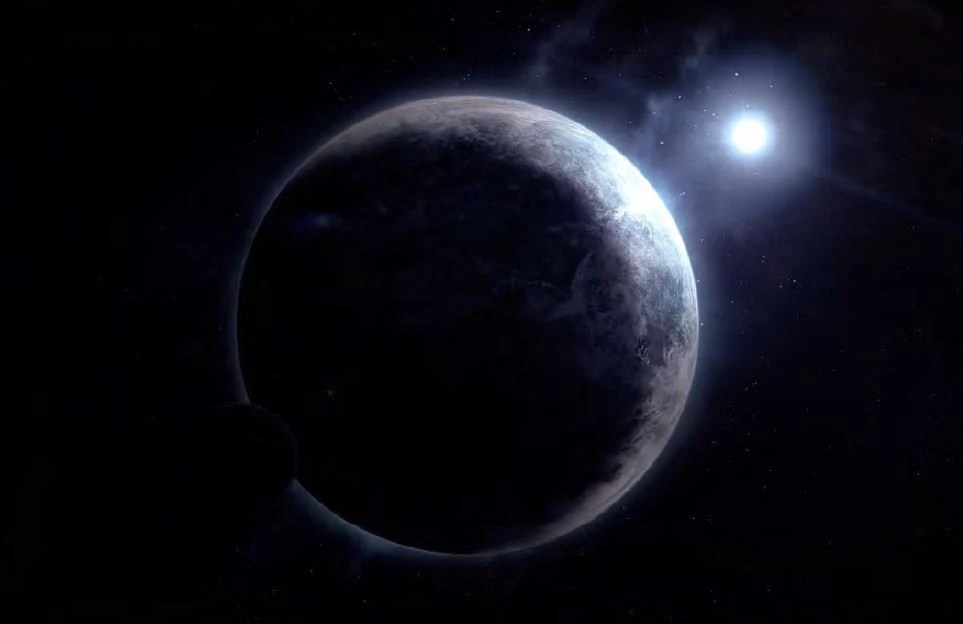
There are many Death Worlds in the Imperium, whose wildlife, native flora or esoteric nature make them inimical to human life. Even in such baleful company, Fenris is amongst the very worst. It is a world of fire and ice, of wolves and dragons. It is one of the most inhospitable planets in the universe, yet the folk of Fenris not only endure, but thrive. A planet of fire and ice, dominated by extremes of climate, Fenris is listed in the Apocrypha of Skaros as one of the three most deadly and turbulent worlds inhabited by humanity in the Milky Way Galaxy. Fenris follows a highly eccentric elliptical orbit around its pale red K-class sun, called the Wolf’s Eye, that takes approximately two Terran standard years to complete.
It is said Fenris breeds cold souls. As a Death World Fenris is considered by most within the Imperium as a veritable hell. Virtually every living thing on the planet is a predator or capable of fighting predators in its own right, and so nothing weak survives on Fenris for long. The few invaders to have set foot on Fenris have learned the hard way that there are more ways to die on Fenris than can easily be counted. As such, the people of Fenris live short, brutal lives where survival is a constant struggle. The majority of Fenris’ population live a largely nomadic existence on the many hundreds of islands dotting the Worldsea. During the Season of Fire most islands sink beneath the waves even as new ones rise up, forcing the tribes to remain almost constantly on the move, taking to the waves each Great Year to find a new place to live. Inevitably the tribes engage in warfare over the ever-limited number of habitable islands and much coveted resources.
***
Cthonia
Temperature / Climate
Sub-Temperate, Microlithic
Population
Approximately 2,000,000,000
Segmentum
Segmentum Solar
Starting bonus:
- +1 Subterfuge, Adaptation & Insight
- +2 Ambition & Rivalry
*
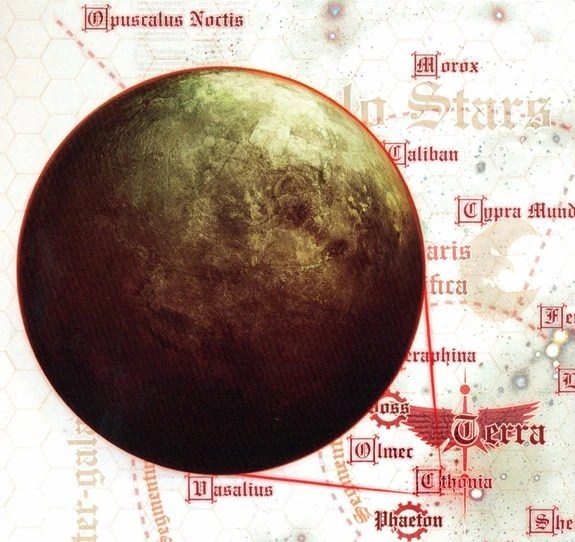
The world of Cthonia existed in one of Terra’s closest neighbouring star systems. Being within reach of even non-Warp-capable spacecraft, Cthonia had been colonised, built upon, tunnelled and mined probably since the dawn of human interstellar space travel before even the Age of Technology had begun. As such, all of the world’s natural resources had been stripped away and used millennia before, and the planet’s ancient mining technology had long since been rediscovered and removed by the tech-priests of Mars.
The planet that remained was largely redundant and abandoned, completely riddled with catacombs, crumbling industrial plants and exhausted mine-workings. None now know who were the masters of this hell world before it was rediscovered by the Imperial forces during the Great Crusade. Some Imperial scholars speculate that it was the Priesthood of Mars, ever greedy for raw materials to feed their forge cities. Other sources indicate that it was a star kingdom that dwindled to nothing long before Unity was even a dream on Terra. No matter who had once controlled the world, they ate the heart of Cthonia until it was a dead husk.
Afterwards, before even the coming of the Age of Strife, perhaps, Cthonia had become an orphan world, abandoned to entropy and violence, and even before the great collapse, true darkness had descended there. By the time the Great Crusade began in ca 800.M30, Cthonia’s mines were long spent, but it had a resource that the new Imperium needed more than metals and jewels: hardened fighters and born survivors in their millions; a lean and hungry race of killers with no illusions about the horrors of the universe. Cthonia, relatively close to Terra in the void, and with whom some minor intermittent contact had been maintained even through the Age of Strife, had its murderous and strife-torn population marked by one of the first expeditionary fleets to leave the Sol System.
***
 The Great Crusade